Your erections are one of the most honest health signals your body produces. Because a firm erection depends on healthy blood vessels, balanced hormones, and a calm nervous system, a change in your erectile fitness often shows up before problems appear anywhere else. The good news is that erectile fitness is trainable, and with the right data you can work on it the same way you would your sleep or your VO2 max.
What does it mean to treat an erection as a vital sign?
An erection is not just a sexual event, it is a vascular one. When you become aroused, your nervous system releases nitric oxide, the arteries feeding the penis relax, and blood flows in faster than it flows out. That whole process depends on a healthy endothelium, the thin lining inside your blood vessels. If that lining is inflamed or stiff, erections get softer and shorter long before you notice symptoms anywhere else.
Here is the part most men never hear: the arteries in the penis are narrower than the arteries feeding the heart. Narrow vessels clog first, which is why urologists have long described erectile changes as an early warning system for cardiovascular disease. Research in sexual medicine has repeatedly found that erectile dysfunction can precede a cardiac event by several years. In other words, the penis is a canary in the coal mine, and tracking it gives you a head start on your overall health.
Why nocturnal erections are the metric that actually matters
During healthy sleep, most men have three to five erections a night. These nocturnal erections are completely involuntary, which is exactly what makes them useful. They are not influenced by stress, mood, a bad day at work, or how attracted you are to your partner. They are a clean, physical read on whether the plumbing is working.
That morning erection you sometimes wake up with is the tail end of the last nocturnal cycle. When morning erections become rare, it is rarely random. It usually reflects something measurable: declining blood flow, shifting testosterone, poor sleep quality, or rising metabolic strain. This is why nocturnal tracking, not bedroom performance, is the gold standard signal for erectile fitness. For a deeper look at the science, see our explainer on the nocturnal penile tumescence test.
The biohacker's erectile fitness stack
Erectile fitness responds to the same inputs that drive longevity. None of this is exotic, but the order and consistency matter.
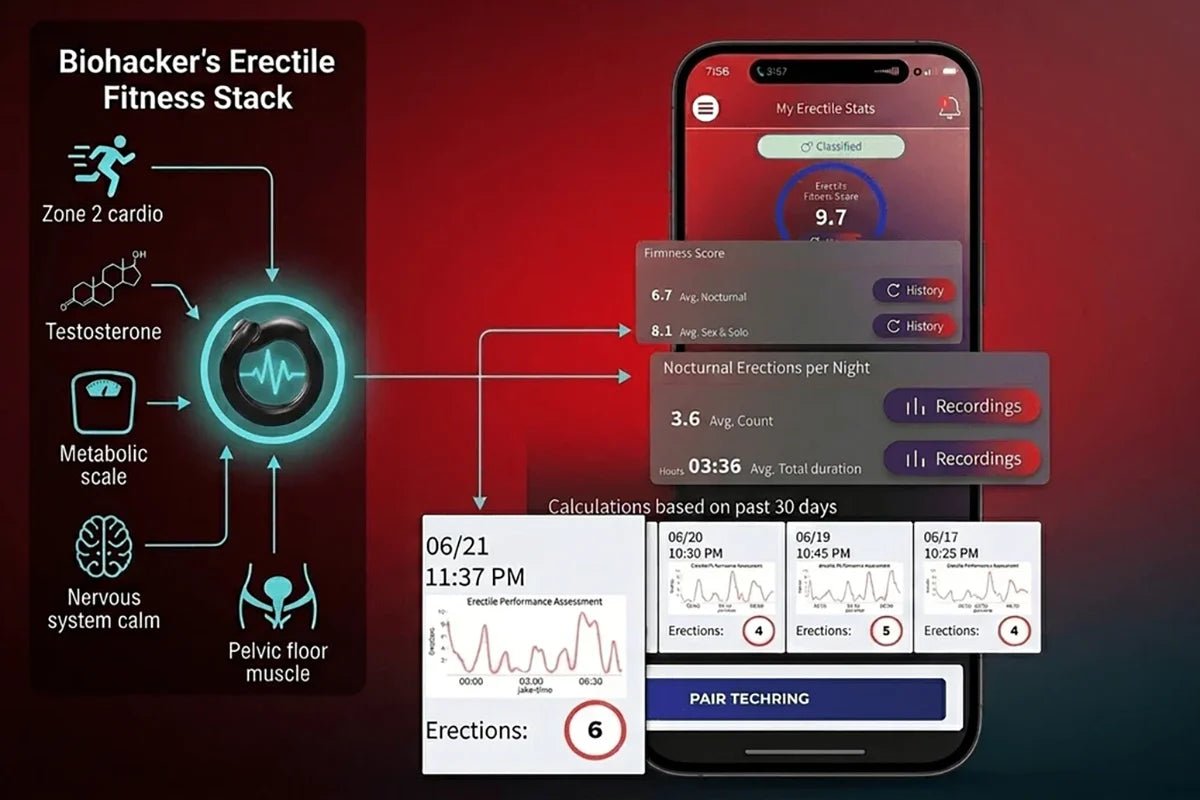
- Train your cardiovascular system. Zone 2 cardio and regular aerobic work improve endothelial function and nitric oxide production directly. A body that can deliver blood efficiently to working muscles delivers it efficiently everywhere.
- Protect your testosterone. Strength training, adequate protein, and quality sleep all support healthy hormone levels. Testosterone influences libido and the responsiveness of erectile tissue, which is why low T and soft erections often travel together.
- Fix your metabolic health. Insulin resistance and excess visceral fat are quietly two of the most common drivers of erectile decline. The recent wave of interest in GLP-1 medications has put a spotlight on this link, because as men lose fat and improve insulin sensitivity, vascular function and erections frequently improve alongside.
- Calm the nervous system. Erections require a parasympathetic, relaxed state. Chronic stress keeps you in fight-or-flight, which constricts blood flow. Sleep, breathwork, and managing alcohol all move the needle here.
- Train the pelvic floor. The pelvic floor muscles help trap blood in the penis during an erection. Targeted pelvic floor work has solid evidence behind it for improving rigidity and control.
You cannot improve what you do not measure
This is where most men get stuck. Your subjective sense of how things are going is unreliable, because performance in the bedroom is tangled up with nerves, novelty, alcohol, and sleep. To know whether your erectile fitness is actually improving, you need objective data over time, the same reason serious athletes wear a sleep or recovery tracker instead of guessing.
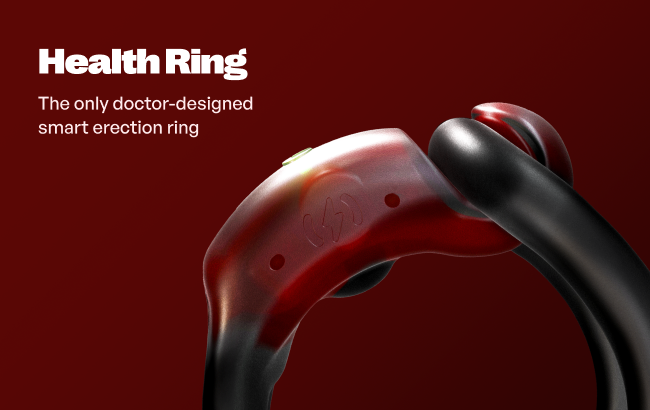
An erection tracker measures what you cannot feel. The FirmTech TechRing is a smart, comfortable ring worn during sleep and during sex that captures the firmness, duration, and number of your erections, then rolls those data points into an Erectile Fitness Score you can watch week by week. Instead of wondering whether your new routine is working, you see the trend line move. The TechRing is endorsed by Dr. Mohit Khera, former president of the Sexual Medicine Society of North America, and it is HSA and FSA eligible.
How to run your own 90-day erectile fitness experiment
Biohacking is just structured self-experimentation. Treat your erectile fitness the same way.
Week 1, set a baseline. Track your nocturnal erections for seven nights without changing anything. This is your starting line.
Weeks 2 to 11, change one variable at a time. Add Zone 2 cardio three times a week, or fix your sleep, or cut evening alcohol. Changing one thing at a time is the only way to know what is actually responsible for any improvement. You can add tags to your TechRing app so you can easily track.
Week 12, re-measure and compare. Look at your Erectile Fitness Score against your baseline. The data tells you what worked, and gives you something concrete to bring to a clinician if the numbers are not moving.
The bottom line
Your erections are a daily, no-cost readout on your cardiovascular, hormonal, and metabolic health. Treat them like the vital sign they are: measure the baseline, train the inputs, and watch the data. If you want to know where you stand right now, start with our free Sexual Health Assessment, then consider a TechRing to turn erectile fitness from a guess into a number you can improve.
Frequently asked questions
Are erections really a sign of heart health? Yes. An erection is a vascular event, and because penile arteries are smaller than coronary arteries, erectile changes often appear years before other cardiovascular symptoms. Persistent erectile difficulty is worth discussing with a clinician for that reason alone.
How many erections should I get at night? Most healthy men have roughly three to five nocturnal erections per night during sleep. A consistent decline can be an early signal worth tracking and discussing with a professional.
What is an Erectile Fitness Score? It is a single number that combines the firmness, duration, and frequency of your nocturnal erections, developed with urologists so you can track erectile health as a trend over time rather than a one-off snapshot.
Can erectile fitness be improved, or is ED permanent? For many men, erectile fitness improves meaningfully with cardiovascular exercise, better sleep, metabolic and hormonal health, and pelvic floor training. Some causes need medical treatment, which is exactly why objective tracking helps you and your clinician see what is working.
Do I need a device to track this? You can notice broad changes on your own, but subjective impressions are unreliable. A nocturnal erection tracker like the TechRing gives you objective, repeatable data, which is the difference between guessing and knowing.