Erectile dysfunction treatment has improved a great deal over the past two decades, but for a specific group of men, one problem keeps showing up: they can get an erection, but they can't keep it, or it never gets quite hard enough for penetration. A study out of Japan, led by Yoshi Sato, MD, of the Sapporo School of Medicine, looked at a simple, non-drug option for that exact problem: our Performance Ring, a doctor-designed erection ring from FirmTech worn at the base of the penis. Here's what the study measured and found out.
When Pills Address the Start of an Erection, Not the Finish
Most men with ED start with medications like Viagra or Cialis (PDE5 inhibitors). These drugs increase blood flow to the penis and help initiate an erection, but they don't do much to keep blood there once it arrives.
For a subset of men, that distinction matters a great deal:
- Erections tend to fade faster with age, independent of how well the initiating mechanism works
- Medication (and, for some men, injections) doesn't always change that
- Most alternatives to medication are invasive, costly, or disruptive to intimacy
Clinicians sometimes call this pattern erection maintenance failure, or early detumescence. One driver is venous leak, where blood exits the penis through veins in the shaft faster than it should. It's a mechanical problem, not a drug-response problem, which is part of why medication alone doesn't always resolve it. That mechanical framing is also what points toward a mechanical, non-drug device as a reasonable option to explore alongside standard care.
How the Performance Ring Works
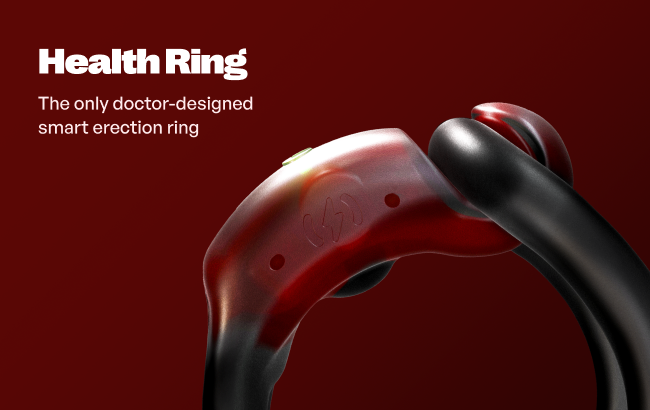
The Performance Ring is worn at the base of the penis and around the testicles. It's built from a soft, body-conforming elastomer with a hook-and-loop closure, rather than the rigid silicone used in many conventional rings.
What it's designed to do:
- Restrict venous outflow, so blood is less able to leave the penis once an erection begins
- Support firmness and duration during sex
- Work alongside a man's own erectile response, rather than substituting for it
What it's designed not to do:
- Restrict arterial inflow, which is why it can be worn comfortably for longer sessions
- Require an erection already in progress. It can be put on while flaccid.
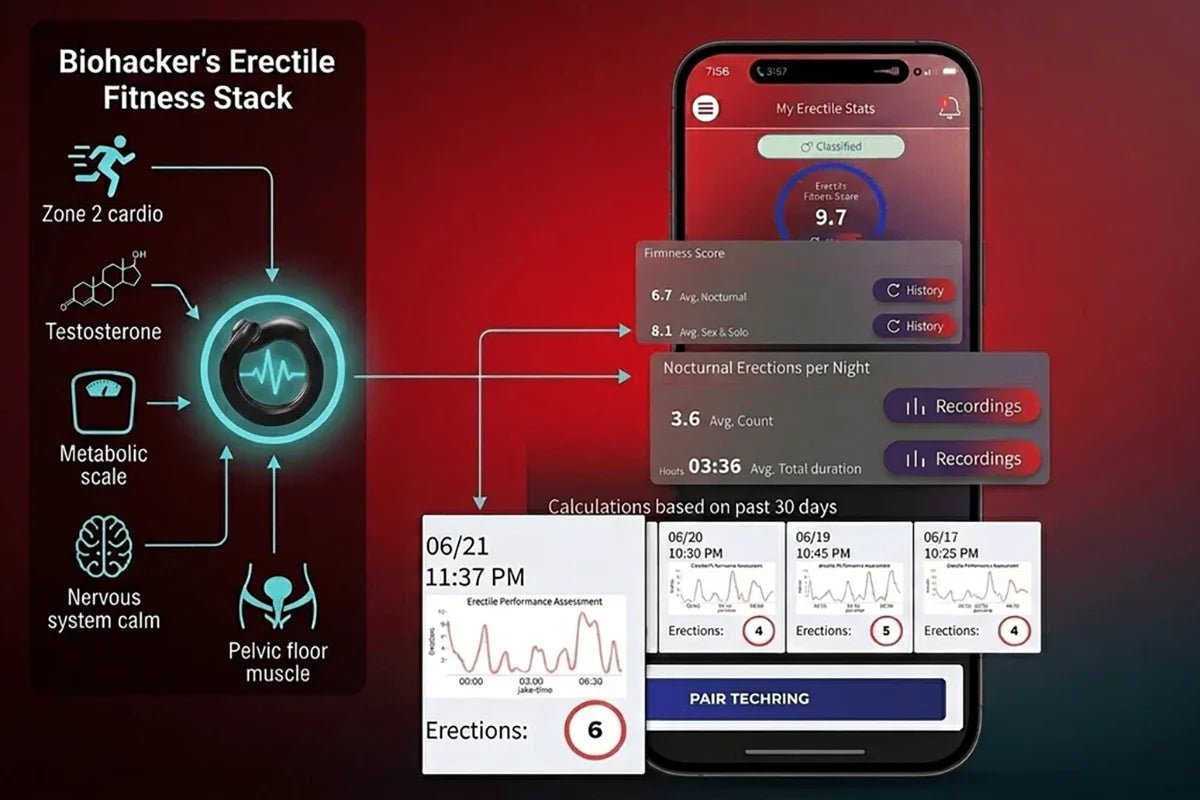
A note on the TechRing: the TechRing, FirmTech's data-tracking erection ring, uses this same soft, body-conforming elastomer and hook-and-loop design as the Performance Ring. It works as an erection ring in the same way, with the added ability to record erection and sleep data through the FirmTech app.
What the Sapporo Researchers Tested
Dr. Sato's team evaluated 40 men, ages 45 to 81, who reported that they could not get erections hard enough for penetration or could not maintain one long enough for intercourse. Every man in the study was already taking a PDE5 inhibitor like Tadalafil, and a subset had also tried injections, and none of them were able to have successful intercourse on medication alone.
Researchers then added the Performance Ring on top of each man's existing medication to see whether combining the two would close the gap medication alone was leaving open.
The Results: Tadalafil Alone Wasn't Enough, Tadalafil Plus the Ring Was
Once the Performance Ring was added to each man's existing medication:
- 85% of participants reported successful intercourse
- 34 of 40 men showed meaningful improvement
The clearest result came from the men taking medication only and an EHS score of 3, 100% were able to have successful intercourse.
Who the Ring Helped Most
Researchers measured each man's baseline erection firmness using the Erectile Hardness Score (EHS), a standard clinical scale that rates firmness on how close an erection is to fully rigid:
- EHS 4: fully hard and fully rigid
- EHS 3: hard enough for penetration, but not fully rigid
- EHS 2: hard, but not hard enough for penetration
- EHS 1: larger, but not hard
- EHS 0: no enlargement at all
The study's results tracked closely with where each man started on this scale:
- EHS 3 (firm, but not quite hard enough for intercourse): 100% success
- EHS 2 (partial stiffening): 50% success
- EHS 1 (soft, no meaningful stiffening): no measurable benefit
What Changed for the Men Who Responded
Among men who saw improvement:
- Erections typically lasted 20 to 30 minutes longer
- Firmness improved
- 70% were able to continue intercourse after ejaculation, for an average of 12 additional minutes
Comfort and Ease of Use
Discomfort is one of the most common hesitations men have about wearing any ring during sex. In this study:
- 88% reported no discomfort
- 91% said the device was easy to use
- No serious side effects were reported
Why This Distinction Matters
Most ED-focused products are built to help start an erection. Fewer are built specifically to help maintain one, which is exactly where a lot of men, particularly as they age, run into trouble. A device engineered around maintenance addresses a gap that medication alone often leaves unaddressed.
Bottom Line
For men who can get an erection but lose it too quickly, or who get close but not quite hard enough for penetration, the Performance Ring is a simple, low-effort option worth discussing with a clinician alongside existing treatment.