
How Antidepressants May Be Quietly Sabotaging Your Sexual Health
A landmark study of 2,163 patients reveals that 79% of people on antidepressants develop sexual dysfunction - yet fewer that half ever tell their doctor.
The Silent Epidemic No One Is Talking About
If you're taking antidepressants and wondering "does Zoloft affect sex drive?" or why your desire, performance, or satisfactions feels different, you're not imagining it. And you're far from alone.
A major real-world study published in the Archives of Sexual Behavior, the SALEX study examined 2,173 patients across Spanish psychiatry clinics who has completely normal sexual function before starting antidepressants. What researchers found was striking: 79% developed sexual dysfunction after beginning treatment, and 64% experienced moderate to severe problems.
Yet despite how widespread the problem is, fewer than 41% spontaneously brought it up with their psychiatrist.
This is the hidden epidemic at the intersection of mental health and sexual health and it has a direct impact on whether treatment works at all. The first step to breaking this cycle is data. Not guesses, not vague feelings, but actual, measurable data about what's happening to your body. That's exactly what erection monitoring tools like the TechRing are designed to provide.
Do Antidepressants Affect Sex Drive? What the Research Says
Yes, and more significantly than most patients are told upfront.
The SALSEX study used a validated clinical tool (the Psychotropic-Related Sexual Dysfunction Questionnaire) to measure the impact. Here's what they found:
Importantly, there were no significant differences between men and women in rates of dysfunction, though men were significantly more likely to find the side effects intolerable.
For men specifically, the problem often starts subtly. Changes in erection quality during sleep, known as nocturnal penile tumescence (NPT), are among the earliest physiological signs that sexual function is being affected. These changes happen before a man is even aware of a problem, which is why passive monitoring during sleep is such a powerful early-warning tool.
Why Do SSRIs Decrease Libido? The Serotonin Connection
Not all antidepressants carry the same risk. The study identified two primary predictors of sexual dysfunction:
-
Treatment with serotonergic antidepressants (SSRIs and SNRIs)
-
Having a more severe underlying psychiatric condition
So if you’re asking “why do SSRIs decrease libido?”, the answer comes down to serotonin. SSRIs work by increasing serotonin levels in the brain. While this helps regulate mood, elevated serotonin can suppress dopamine, the neurotransmitter most closely tied to sexual desire, motivation, and arousal.
The result: your mood stabilizes, but your sex drive, genital sensitivity, and ability to reach orgasm can all take a hit. For men, this often manifests as depression causing erectile dysfunction or delayed climax. For women, it typically presents as reduced desire and difficulty with arousal.
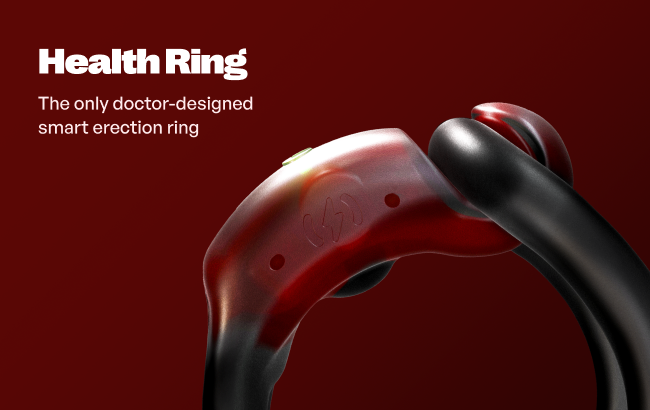
Understanding when these changes begin and how much they progress is critical for managing them. This is where objective erection monitoring becomes clinically valuable. The TechRing is an FDA registered device that tracks nocturnal erection activity passively during sleep, providing a real biological baseline of your sexual health from the moment you start a new medication. If SSRIs are affecting your erectile function, the TechRing captures that change in measurable data, before it becomes a bigger problem.
Can Depression Cause Erectile Dysfunction? (Yes — and So Can the Treatment)
This is where the picture gets more complicated.
Can depression cause erectile dysfunction? Absolutely. Depression directly disrupts the brain's reward and arousal pathways, lowering libido and impairing physical sexual response. This means that even before a single pill is taken, depression itself is already working against your sex life.
Then add an SSRI to the equation, and you may be compounding the problem.
This bidirectional relationship — where depression and sexual dysfunction feed into each other — is one of the most under-addressed issues in mental health care:
-
Depression lowers libido and causes erectile dysfunction
-
Sexual dysfunction lowers self-esteem and deepens depression
-
Antidepressants treat the depression but can worsen the sexual dysfunction
-
Sexual side effects lead patients to quietly stop their medication
The result is a cycle that undermines both mental health recovery and sexual wellbeing simultaneously.
One of the most difficult clinical challenges here is determining whether erectile dysfunction is being caused by the depression itself, the medication, or both. This is nearly impossible to answer without objective data. The TechRing solves this by tracking erection quality during REM sleep — a biological process that is neurologically distinct from psychological arousal. By establishing a baseline before treatment and tracking changes throughout, clinicians can pinpoint whether the SSRI is the source of the problem, and by how much.
How to Increase Sex Drive While on Antidepressants
If you're experiencing sexual side effects, there are evidence-backed options. The psychiatrists in the SALSEX study responded to reported dysfunction in two primary ways:
-
Switching to a different antidepressant (34% of cases) — particularly to medications like bupropion, which works through dopamine pathways rather than serotonin and is associated with fewer sexual side effects
-
Waiting to see if problems resolved on their own (33% of cases)
Beyond what the study observed, current clinical approaches to how to increase sex drive while on antidepressants include:
- Dose adjustment — lowering the dose may reduce side effects while maintaining therapeutic benefits
-
Medication switching — moving to antidepressants that don’t cause sexual dysfunction (e.g., bupropion, mirtazapine)
- Adjunct treatments — for men, PDE5 inhibitors like sildenafil have been used to address SSRI-induced erectile dysfunction
- Timing strategies — taking medication after sexual activity ("drug holidays" under medical supervision) to reduce acute side effects
- Erection monitoring — using a clinically validated device like the TechRing to track how each intervention is working in real time
The problem with the "wait and see" approach — used in 33% of cases — is that it's blind. There's no data to tell a doctor whether erectile function is improving, staying flat, or getting worse. The TechRing changes this. Because it collects nightly data passively during sleep, it gives both patient and doctor a clear, objective picture of whether a medication adjustment is actually working - turning "wait or see" into "measure and act."
The Communication Gap: Why Most People Stay Silent
The most troubling finding in the SALSEX study isn't how common the side effects are — it's how rarely they're discussed.
With fewer than half of patients bringing up sexual side effects, a massive portion of this problem remains invisible to the clinicians best positioned to help. Patients stay silent because of:
-
Embarrassment discussing intimate changes
-
Difficulty recognizing a gradual decline in sexual function
-
Uncertainty about whether the medication is actually the cause
-
Reluctance to "complicate" their mental health treatment
This silence has real consequences. Sexual dysfunction is one of the leading reasons patients stop taking antidepressants without telling their doctor — and treatment abandonment puts mental health recovery at serious risk.
This is where the TechRing removes one of the biggest barriers to that conversation. When a man can bring his doctor a graph showing measurable changes in nocturnal erection frequency and duration over the past 30 days, the conversation shifts entirely. It's no longer about voicing something uncomfortable — it's about reviewing data. The TechRing is FDA-registered and clinically proven to collect reliable physiological data on sexual function over time, giving men the objective evidence they need to have that conversation with confidence.
Why Erection Monitoring Matters During Antidepressant Treatment
One challenge in addressing antidepressant-induced sexual dysfunction is that it relies almost entirely on patient self-reporting — which, as the SALSEX I data shows, is severely underreported.
This is where objective erection monitoring becomes the most practical and powerful tool available. The TechRing tracks nocturnal erections — which occur naturally during REM sleep, independent of psychological arousal — providing concrete, quantifiable data that doesn't depend on a patient's comfort level discussing sensitive topics.
The TechRing is:
- FDA-registered — meeting the regulatory standard for medical devices used to assess sexual health
- Clinically proven — validated in real-world use to collect accurate physiological data on erection quality, frequency, and duration during sleep
- Completely passive — worn during sleep, requiring no active participation from the user
- Longitudinal — it tracks changes over time, making it uniquely suited to monitoring the progressive effects of SSRIs on sexual function
For men on antidepressants, this kind of monitoring offers distinct advantages:
- Early detection of changes before they become severe or relationship-threatening
- Clearer clinical picture to distinguish between medication side effects, psychological factors, and underlying conditions
- Better treatment decisions — rather than a generic "wait and see" approach, clinicians can make data-driven adjustments
- Patient empowerment — men can bring real information to their doctor instead of vague concerns, making difficult conversations much easier
The Bigger Picture: Sexual Health Is Part of Mental Health Recovery
Depression and sexual health are not separate issues. Sexual dysfunction affects:
-
Relationship quality and intimacy
-
Self-esteem and confidence
-
Overall quality of life
-
Treatment adherence — the willingness to stay on necessary medication
-
Mental health recovery itself
For men in particular, experiencing erectile dysfunction or decreased libido while on antidepressants can compound existing confidence issues tied to depression — creating a feedback loop that slows recovery on both fronts.
Treating depression while ignoring its impact on sexual function isn't comprehensive care. It's half the picture. And managing that impact without objective data is guesswork.
What You Should Do If You're Experiencing Sexual Side Effects
If antidepressants are affecting your sex life, here's what to know:
- You are not alone - 79% of people on serotonergic antidepressants experience this.
- It is not inevitable - there are clinical options beyond waiting it out.
- Telling your doctor matters - silence puts your overall treatment at risk.
- Objective data changes the conversation - the TechRing gives you real, measurable evidence to bring to your provider instead of subjective impressions.
- Monitoring from day one is the smartest move - establishing a baseline before or at the start of antidepressant treatment means any changes are immediately visible and actionable.
- The right antidepressant for you exists - some cause far less sexual dysfunction than others, and erection data helps confirm when a switch is working.
The SALSEX study makes one thing clear: sexual health monitoring should be integrated into antidepressant treatment from day one. The TechRing is the FDA-registered, clinically proven tool that makes that possible - passively, privately, and precisely.