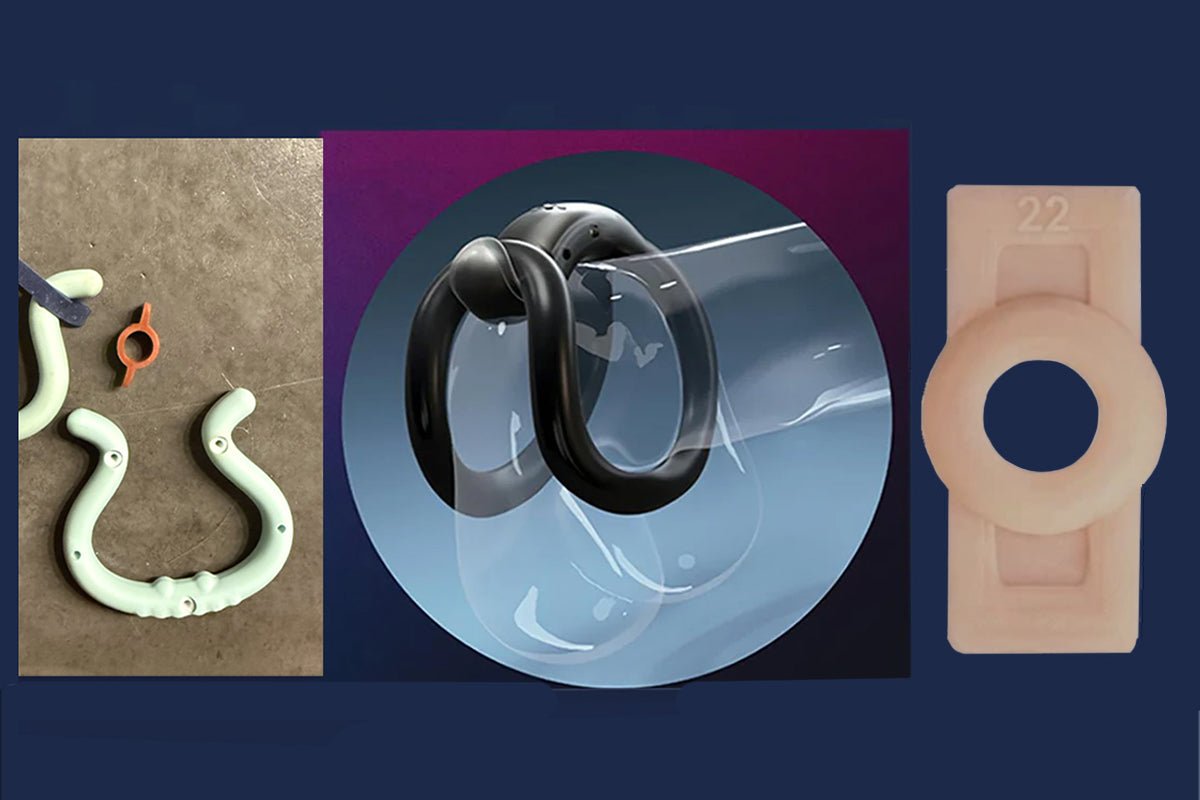

A cock ring works by slowing the blood that leaves the penis, not by adding anything to it. Worn at the base of the shaft, sometimes looping the testicles too, light and adjustable pressure keeps more blood in the erectile tissue for longer, which is what produces a harder, longer-lasting erection. No pill, no pump, nothing absorbed into the bloodstream: the effect is entirely mechanical, and it lasts only as long as the ring stays on.
That single mechanism explains almost everything else worth knowing about these devices, from why fit matters more than material, to why a snugger ring feels different from a looser one, to why the effect ends the moment the ring comes off. Here is how it actually works, what changes it, and where the limits are.
The mechanism: venous occlusion, in plain terms
An erection happens when arteries widen and pump blood into the penis faster than veins can drain it back out. A cock ring does not touch that inflow. It works entirely on the outflow side, applying gentle pressure around the base of the penis so that blood entering stays in longer than it otherwise would. Clinicians call this venous occlusion. Everything else, the firmness, the fullness, the extra minutes, follows from that one change.
This is also why a ring cannot create an erection that was not forming in the first place. It amplifies and extends blood flow already underway. It does not generate arousal, and it does not act on hormones, nerves, or the vascular system the way a medication does.
Why the effect disappears the moment the ring comes off
Because the mechanism is purely mechanical, it is also purely temporary. Remove the ring and normal blood flow resumes immediately. Nothing lingers in the tissue and nothing needs to clear out of the body, which is a meaningful difference from a PDE5 medication that stays active for hours after it is taken.
That immediacy is the advantage. A ring puts a man in direct control of exactly when the effect starts and stops, on his own schedule, in the moment. There is no advance planning, no waiting for a pill to kick in, and no guessing how long it will last in the body. Put it on, get the effect; take it off, and things go back to normal. That is a different kind of control than a medication offers, not a lesser one.
Fit changes the effect more than material does
Two rings built from the same medical-grade elastomer can feel completely different depending on how they fit. FirmTech's Performance Ring and MaxPR are a useful side-by-side here, since both use the same patented hook-and-loop closure and the same phthalate- and latex-free material, and both still produce distinct experiences.
The Performance Ring is the looser, more adjustable of the two, fitting up to 6.5 inches in girth, built for comfortable, longer sessions. MaxPR is snugger and more restrictive, fitting up to 6 inches, applying more pressure on the urethra for a shorter, more intense window of up to about an hour. Neither is more "correct." The tighter the fit, within a safe range, the more pronounced the pressure effect and the shorter the recommended wear time; the looser the fit, the longer a man can comfortably wear it. For that reason, FirmTech recommends the Performance Ring as the better starting point for anyone new to wearing a ring: it gives a man time to learn how the pressure feels before stepping up to MaxPR's snugger fit.
This is also why an adjustable, hook-and-loop design outperforms a rigid silicone O-ring for most men. A fixed ring gives one tightness, on one man, at one point in an erection. An adjustable closure lets the fit change with the moment.
What the early data shows
Preliminary data from a Yoshi Sato study on FirmTech's Performance Ring and MaxPR gives some sense of the range this mechanism produces. In effective cases, erection hardness and duration both roughly doubled. Duration extended by about 20 minutes on average, and in 75 percent of effective cases, men maintained an erection for an additional 10 to 15 minutes after ejaculation. This is early, preliminary data, not a large-scale clinical trial, but it is a useful real-world signal of what venous occlusion actually delivers when it works.
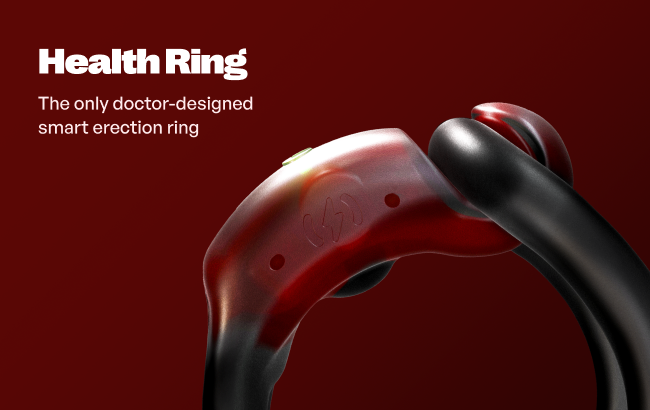
Separately, the TechRing, FirmTech's sensor-equipped ring, has been used to capture more than 250,000 recordings of firmness, duration, and nocturnal erections to date, and its device-satisfaction and design have been documented in peer-reviewed research, including an IRB-approved randomized study comparing device preference among men with and without erectile difficulty. That data does not change the underlying mechanism; a smart ring works the same way a non-tracking ring does. What it adds is a record of the effect instead of a guess.
Constriction rings, vibrating rings, and tracking rings: same mechanism, different add-ons
Every ring in this category relies on the same venous-occlusion effect described above. What varies is what gets added on top of it.
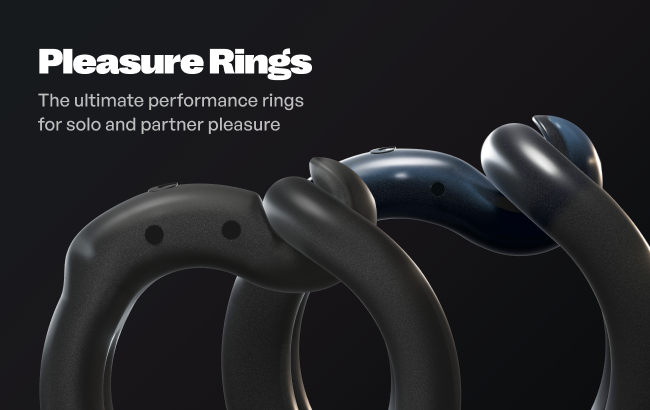
A non-tracking constriction ring, like the Performance Ring or MaxPR, does exactly one thing: it slows outflow. A vibrating ring adds stimulation on top of the same mechanism. FirmTech's RingMate is a compact, three-speed vibrator built to attach securely to the Performance Ring, so the mechanical effect and the added sensation work together rather than as separate products; it also works on its own. A smart tracking ring like the TechRing keeps the identical mechanical effect and layers sensors on top, measuring firmness, duration, and erection count through a companion app instead of leaving the result to memory.
None of these change what is physically happening at the base of the penis. They change what a man gets in addition to it: more sensation, or more data.
Safety limits: why wear time is not optional
Because the entire effect depends on restricting outflow, wear time is the one variable that cannot be treated casually. Every FirmTech ring specifies a maximum: up to about an hour for the snugger MaxPR, longer for the more adjustable Performance Ring and the TechRing, up to 12 hours for the latter given its looser, one-size fit. Discomfort, numbness, or a change in skin color while wearing any ring is a signal to remove it, not push through it. This is a mechanical device applying real pressure to real tissue, and respecting the listed wear time is what keeps the effect safe rather than counterproductive.
Where a ring fits alongside everything else
A ring is not competing with medication or hormone therapy; it is solving a different part of the problem. A PDE5 medication changes blood flow pharmacologically and takes time to act and clear. A ring changes it mechanically, on demand, with an effect that starts and stops with wear. For men who want to know whether a ring, a lifestyle change, or a prescribed treatment is actually making a difference over time, rather than relying on memory of a handful of good or bad nights, the TechRing's Erectile Fitness Score turns that question into a number instead of a guess. FirmTech's Free Sexual Health Assessment is also a low-commitment starting point for men who are not yet sure which option fits.